Clarifier-free architecture
MAK Fine Flow Filtration separates biological solids and returns retained biomass for further digestion, removing the need for a conventional secondary clarifier.
Less space. Integrated treatment.Turn sewage into a resource. Meet MAK-HBR™ — the modular, clarifier-free sewage treatment system engineered for intelligent operation and sustainable water reuse.
Hybrid biological treatment, precise control and advanced polishing — brought together in one compact system.
MAK Fine Flow Filtration separates biological solids and returns retained biomass for further digestion, removing the need for a conventional secondary clarifier.
Less space. Integrated treatment.Continuous dissolved oxygen monitoring adjusts aeration to actual process demand, helping avoid both under-aeration and unnecessary blower operation.
Real-time DO controlUV disinfection, ozone-based advanced oxidation and chlorination provide complementary treatment barriers, with residual protection for storage and distribution.
UV + AOP + ChlorinationOptimized anaerobic digestion and internal biomass recirculation reduce sludge handling. Modular design supports expansion as your treatment needs evolve.
Reduced handling. Greater flexibility.A connected treatment train that balances flow, breaks down organic matter and polishes water for its next use.
Coarse and fine screening remove debris. Hydrodynamic cavitation breaks down organic solids, vortex separation removes grit, and equalization balances incoming loads.
The MAK-ABD™ anaerobic biodigester reduces organic loading before the MAK-HBR™ aeration reactor provides controlled aerobic treatment.
The MAK Fine Flow Filter retains biological solids. Automatic backwashing returns biomass to the biodigester for further stabilization.
UV, ozone-based advanced oxidation and chlorination provide final treatment. Water quality is verified against the requirements of its intended reuse.
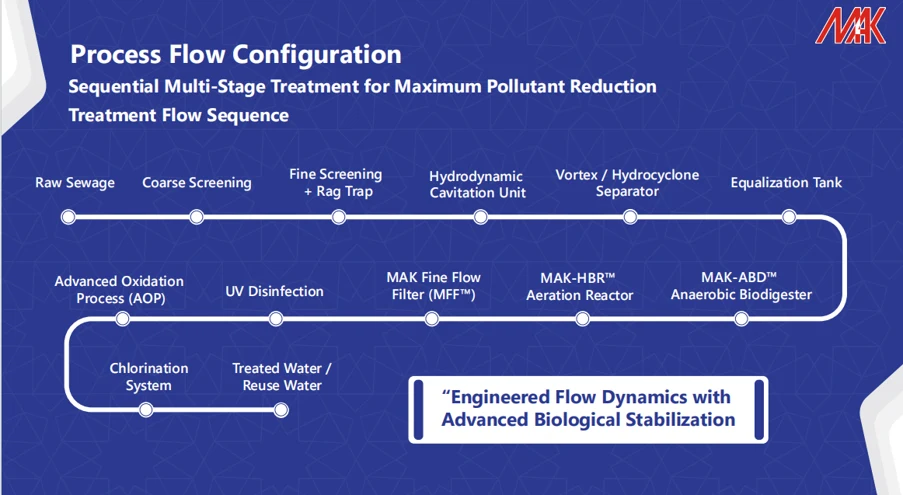 Explore the complete process flow
Expected treatment performance based on the supplied influent design ranges. Actual results depend on loading, operation and site conditions.
| Water quality parameter | Influent design range | Reduction | Expected treated water |
|---|---|---|---|
| BODBiochemical oxygen demand | 350–400 mg/L | ≤ 20 mg/L | |
| CODChemical oxygen demand | 600–900 mg/L | ≤ 100 mg/L | |
| TSSTotal suspended solids | 350–500 mg/L | ≤ 30 mg/L | |
| TNTotal nitrogen | 35–45 mg/L | ≤ 10 mg/L | |
| TPTotal phosphate | 9–15 mg/L | ≤ 2 mg/L |
Rounded design reductions from the supplied performance summary, based on average influent values. These are design targets, not site-specific test results.
Reduce freshwater demand by matching treated water to the right non-potable application.
Reuse requires application-specific water quality checks and applicable approvals. This system is not presented as a drinking-water treatment solution.
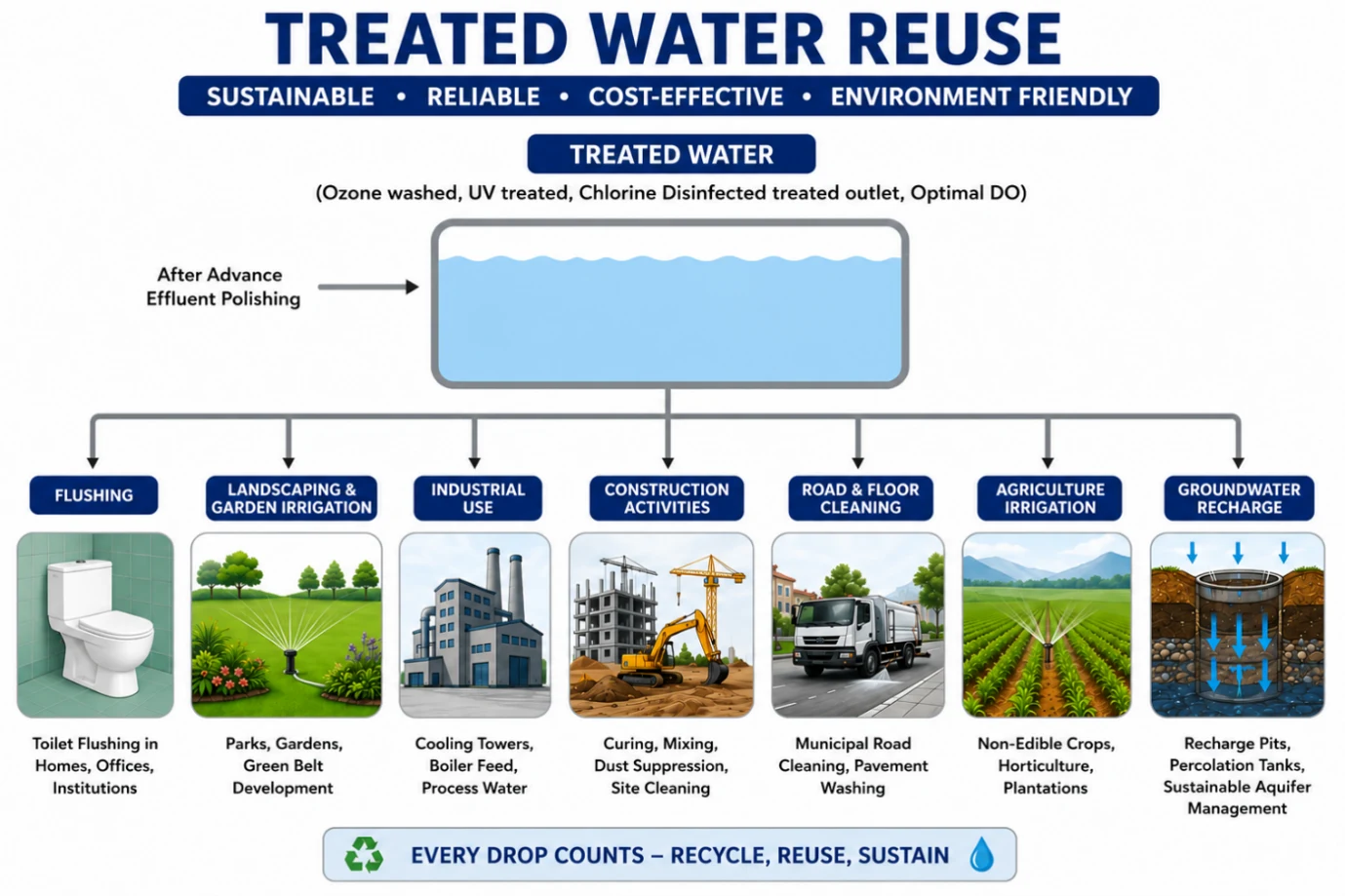 View water reuse possibilities
Explore MAK India’s treatment installations, campus infrastructure and engineering on the ground. Select a photo to see the full view.
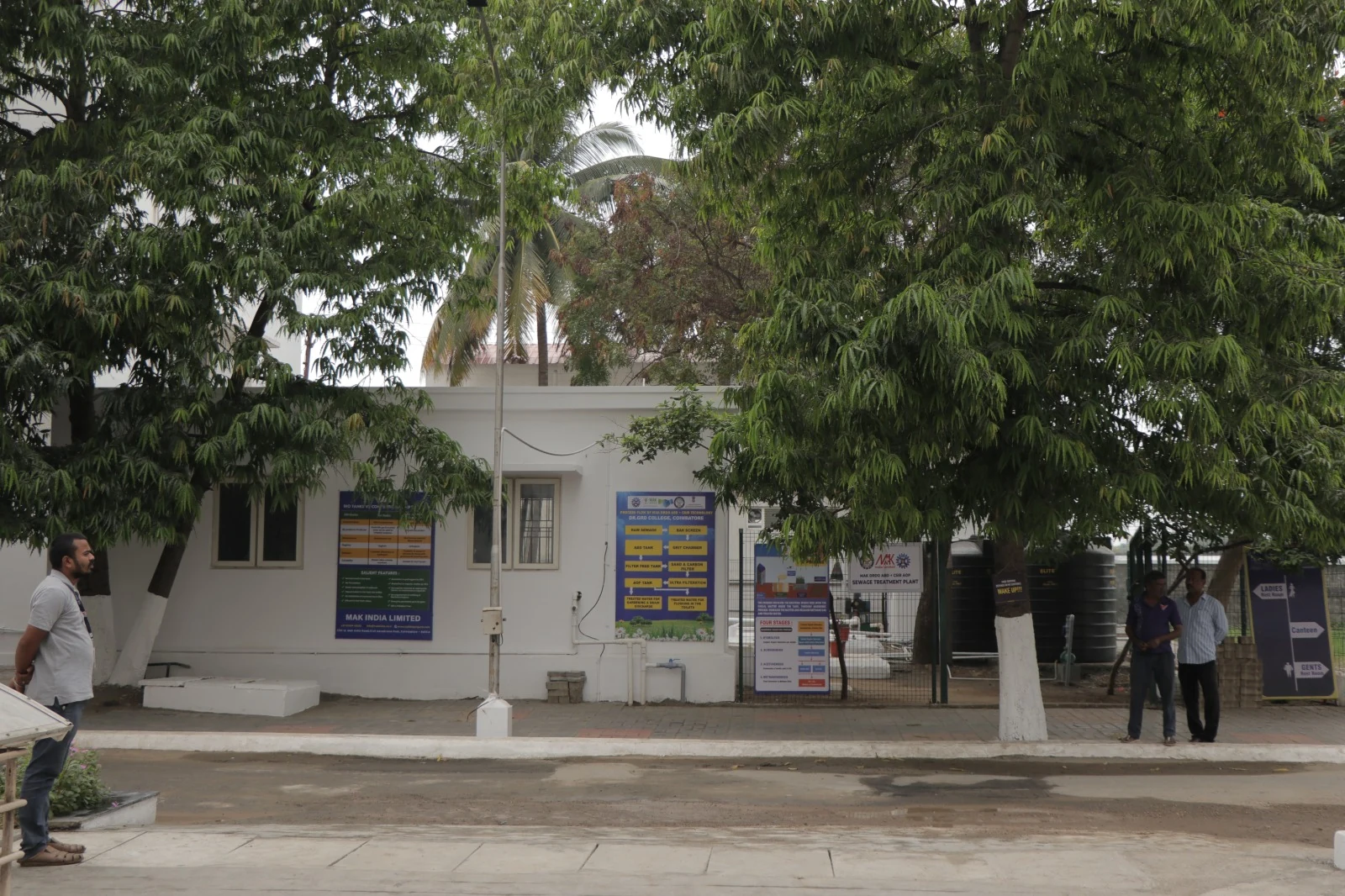
Campus sewage treatment facility, Coimbatore
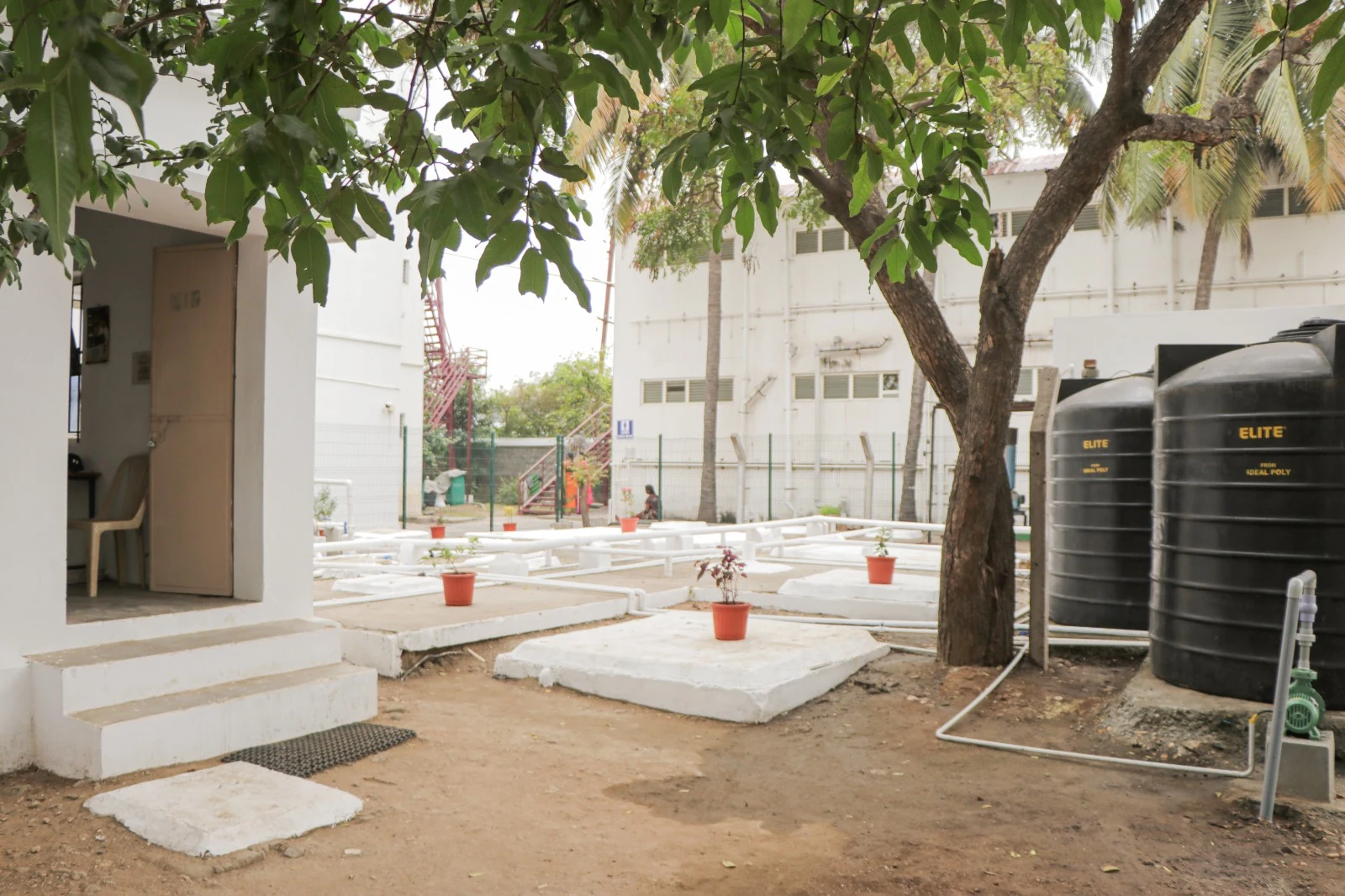
A closer look at the tanks and pipework
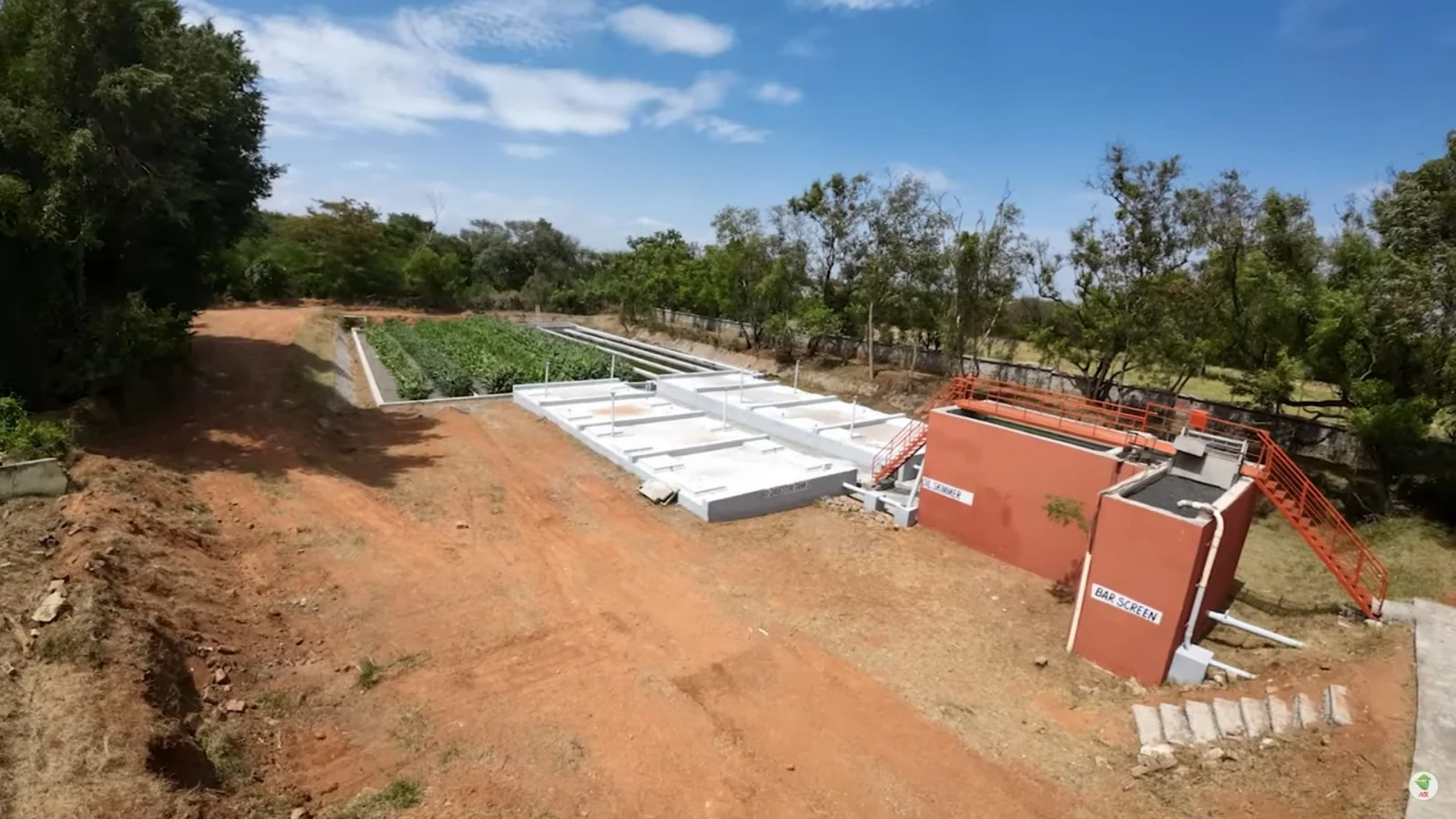
An overview of the treatment installation
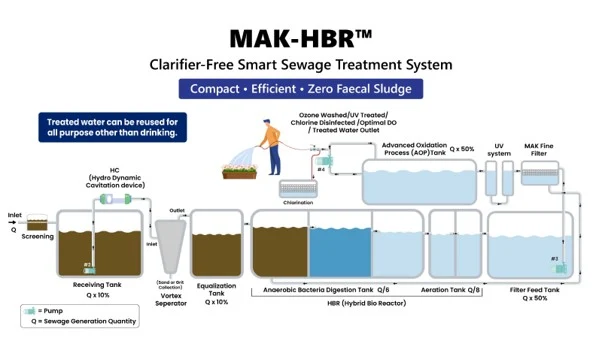
An integrated approach to treatment
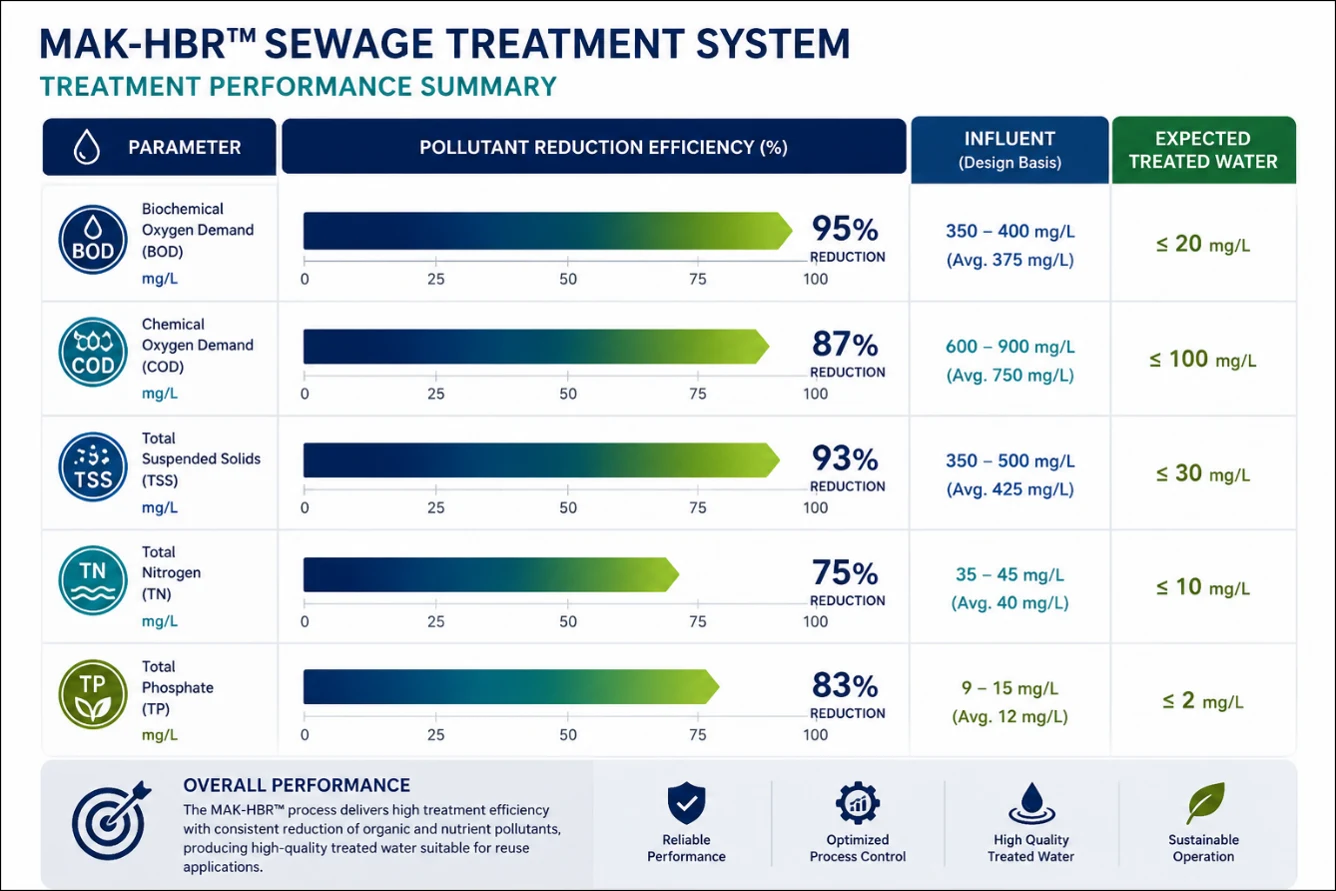
Design parameters at a glance
From screening to treated water
Explore the supplied letters of appreciation and technical design notes from MAK India.
The letters relate to the projects and biodigester work described in those documents; they are not a blanket certification of every MAK-HBR installation.
Discuss your treatment capacity, site conditions and reuse needs with MAK India.
info@makindia.co.in
+91 95001 31791 Contact & WhatsApp
+91 422 4305074 Office
Monday – Saturday
8:30 AM – 5:00 PM
33AABCM4713G1ZW